One wedding. One system.
Not a website builder. Not a registry. ringbearer is the operational layer: everything that has to actually happen between “engaged” and “married,” in one place that stays in sync.
The average wedding runs on three spreadsheets, a venue portal, a DJ platform, a group text, and a folder of PDF menus, none of which talk to each other. When a guest RSVPs no, someone has to remember to update the seating chart, the catering count, the drink order, and the place cards. Usually someone doesn't.
Here, it's one database. The guest list feeds the seating chart, the dietary counts, and the drink math. The budget knows what the vendors are owed. The day-of timeline knows what the ceremony runs. Change a thing once, and everything downstream already knows.
The load-bearing walls.
Each one deep enough to replace the tool you're using now.
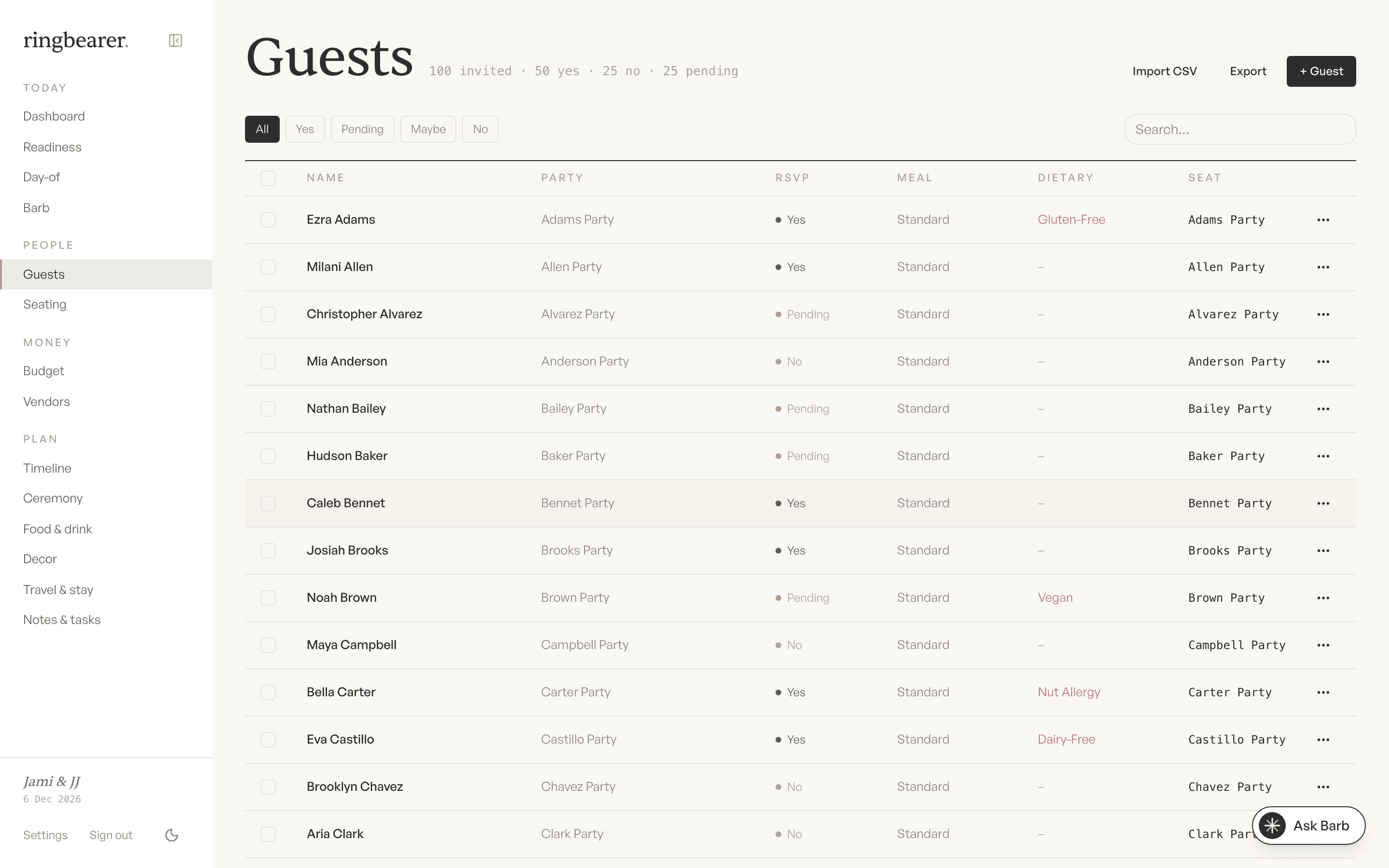
Guest list
RSVPs, dietary needs, households and parties. Import the spreadsheet once, then retire it.
Read more
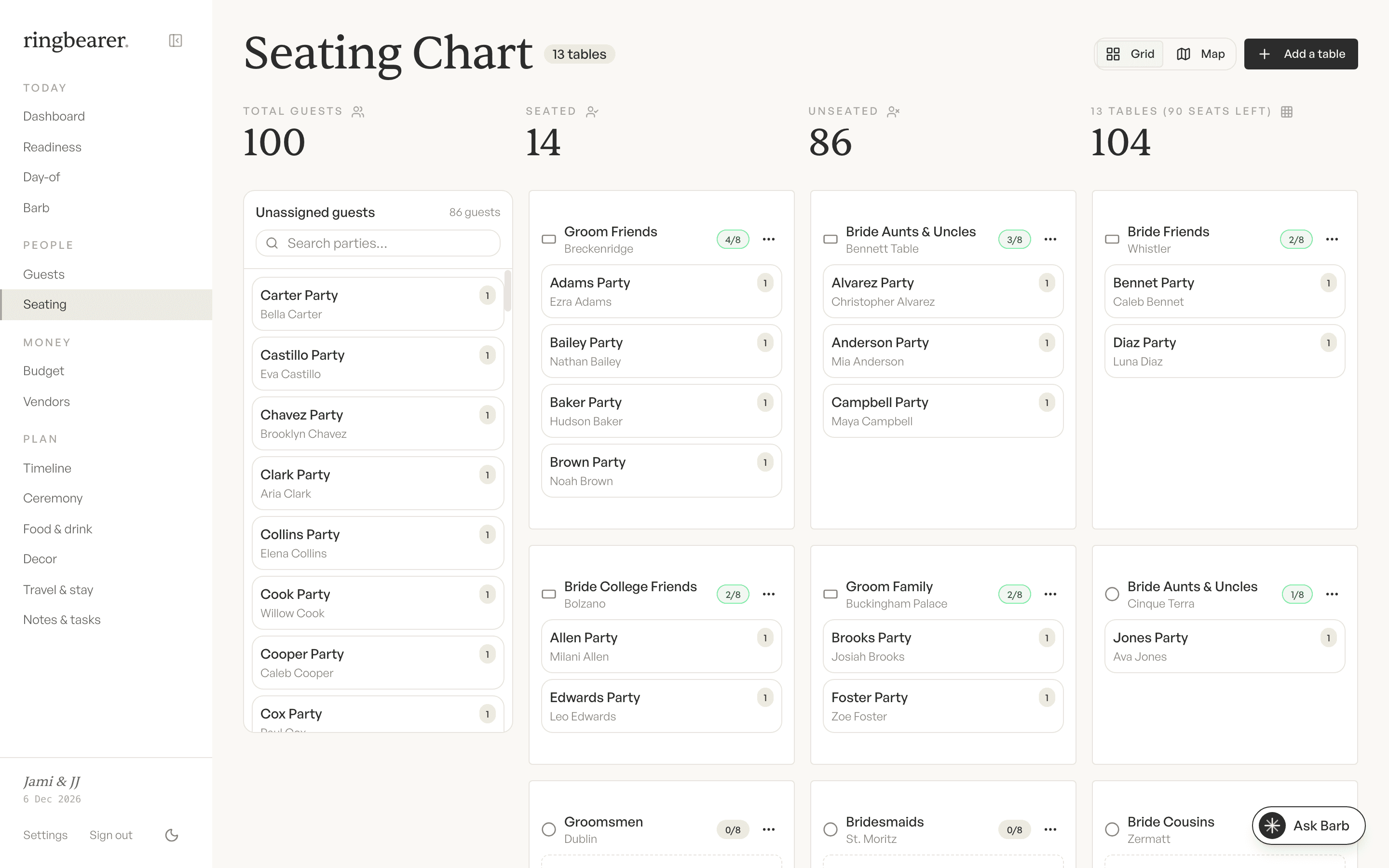
Seating chart
Drag guests onto tables on a real floor plan. Capacity at a glance, politics handled quietly.
Read more
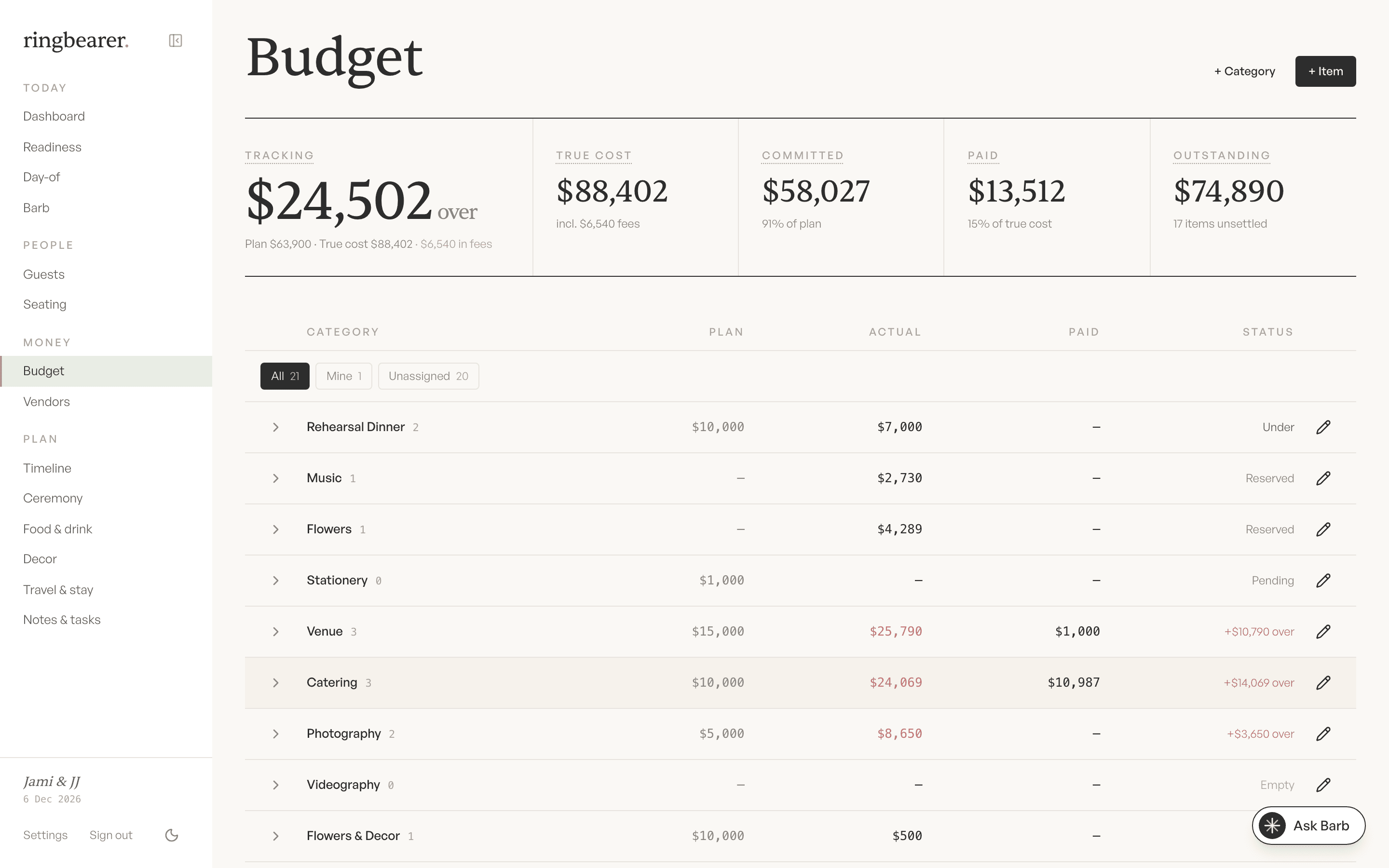
Budget
Plan, paid, and what's left in every category. Seventeen categories, zero drift.
Read more
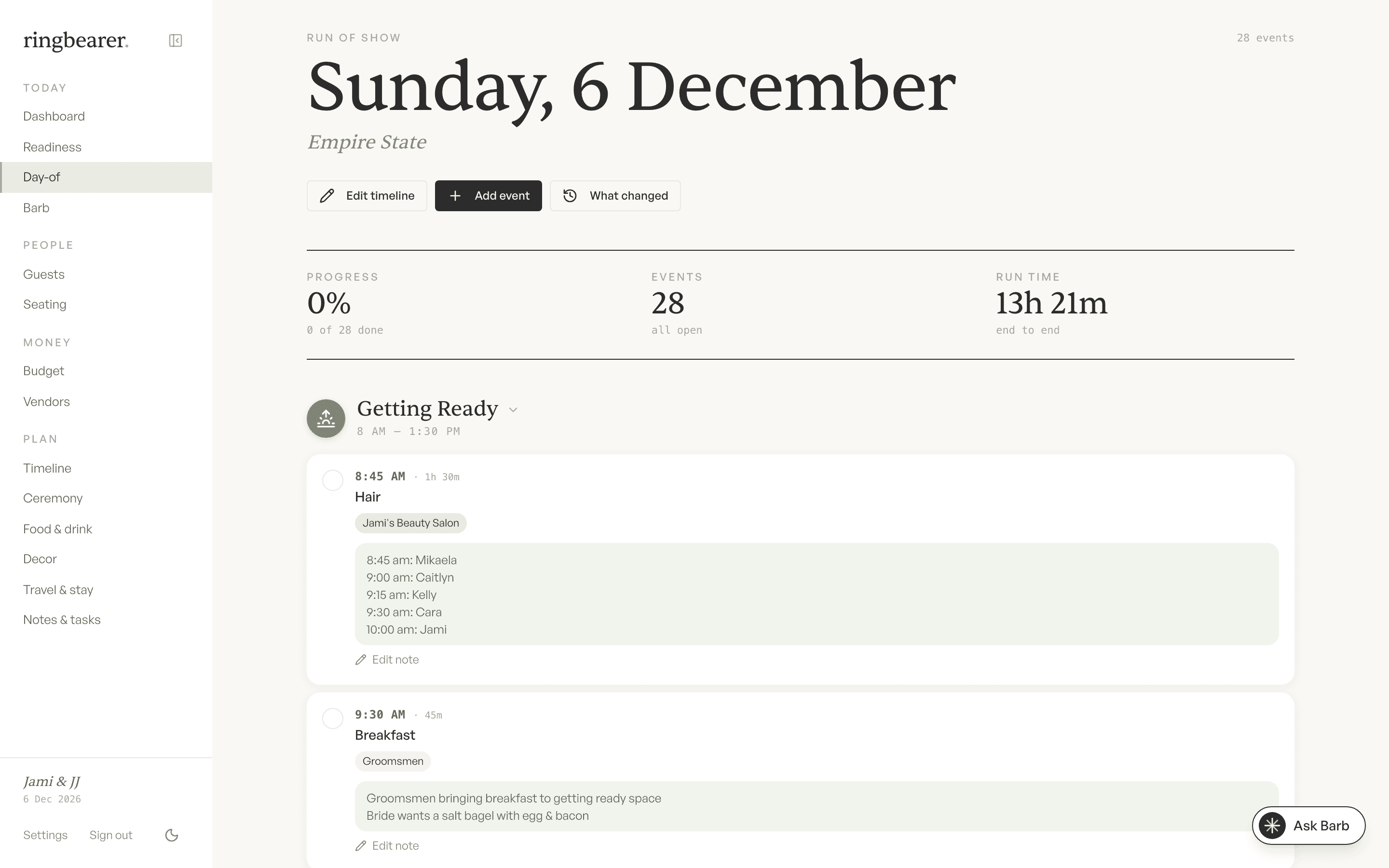
Day-of timeline
The day-of timeline, from getting ready to send-off, on one page a coordinator can print.
Read more
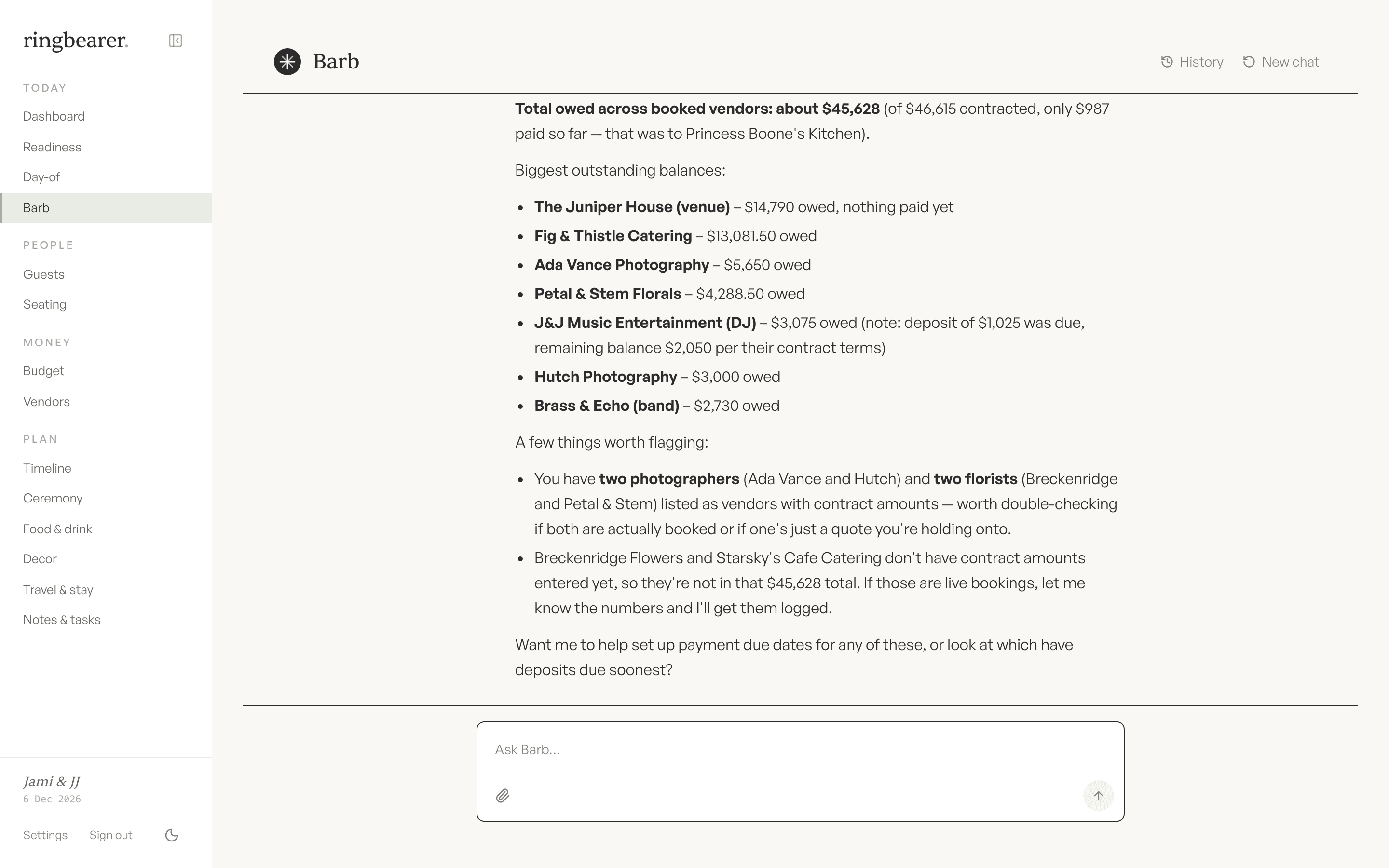
Barb
An AI coordinator wired into the wedding's live data. She doesn't just advise. She edits.
Read more
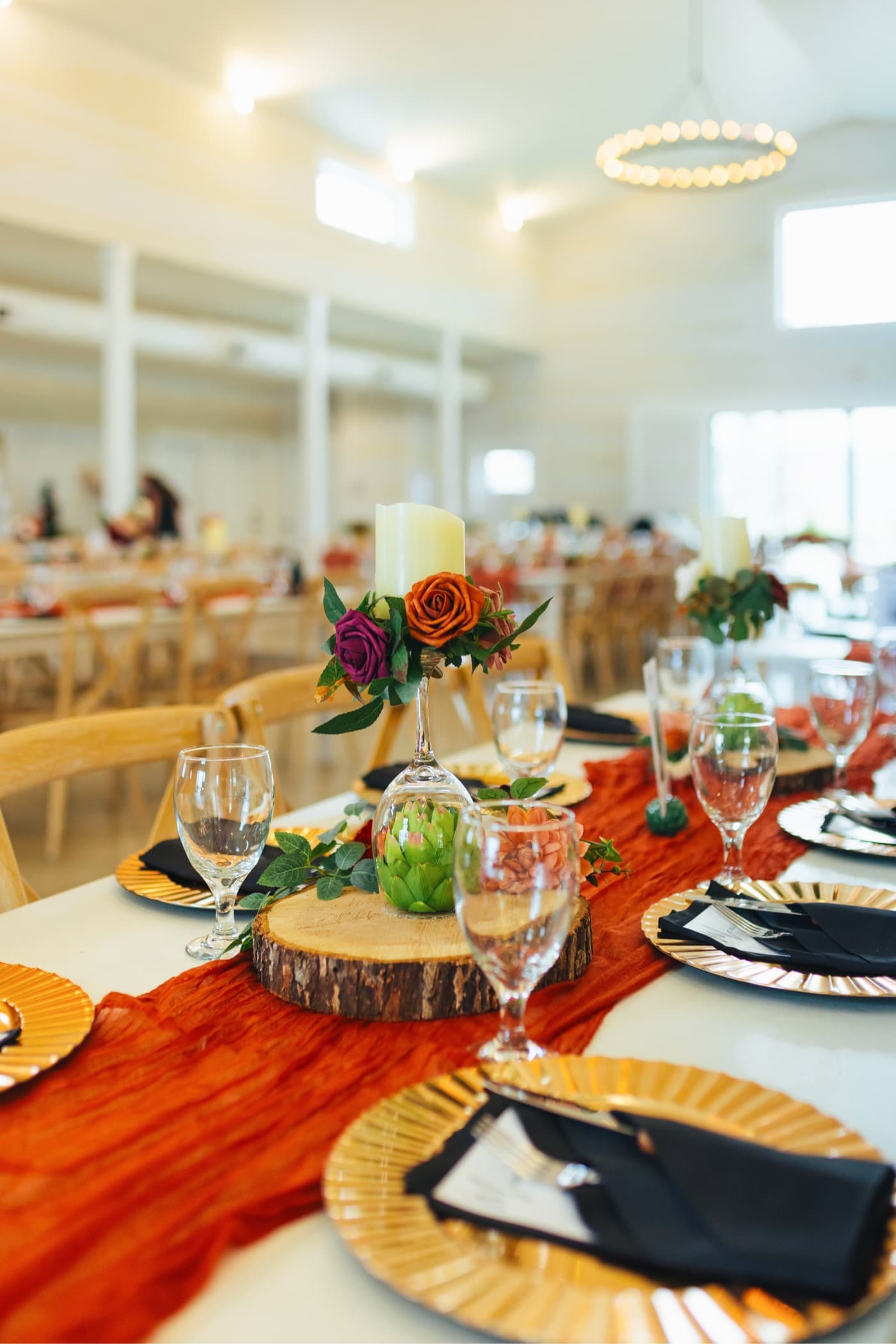
The details that eat evenings.
Vendors, drinks, decor, milestones, travel, dates, the ceremony itself: tracked in the same system, fed by the same data.
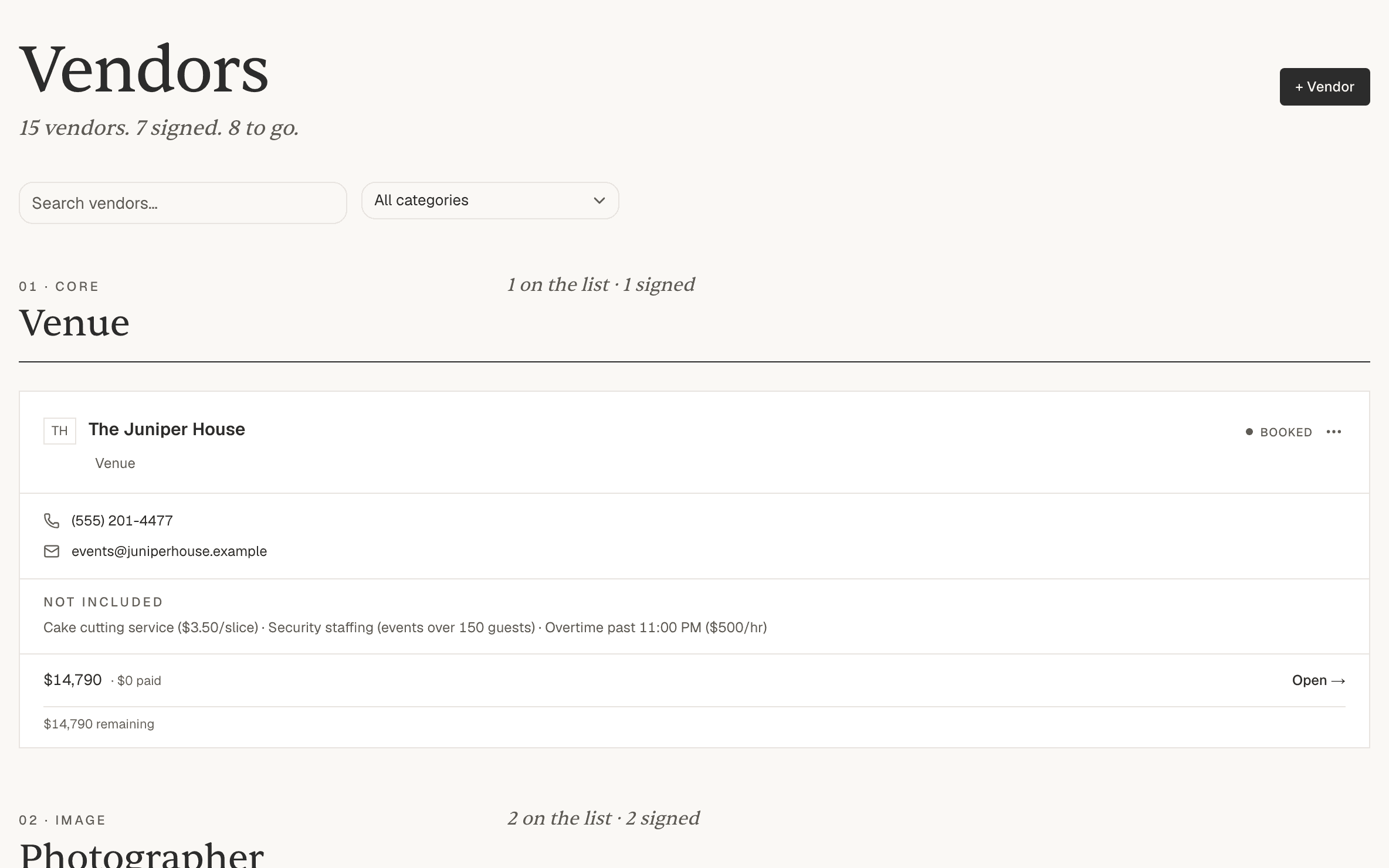
Vendors
Contacts, contracts, payment schedules, and documents for every vendor. The caterer's PDF finally has a home. Ratings included, for the group chat's benefit.
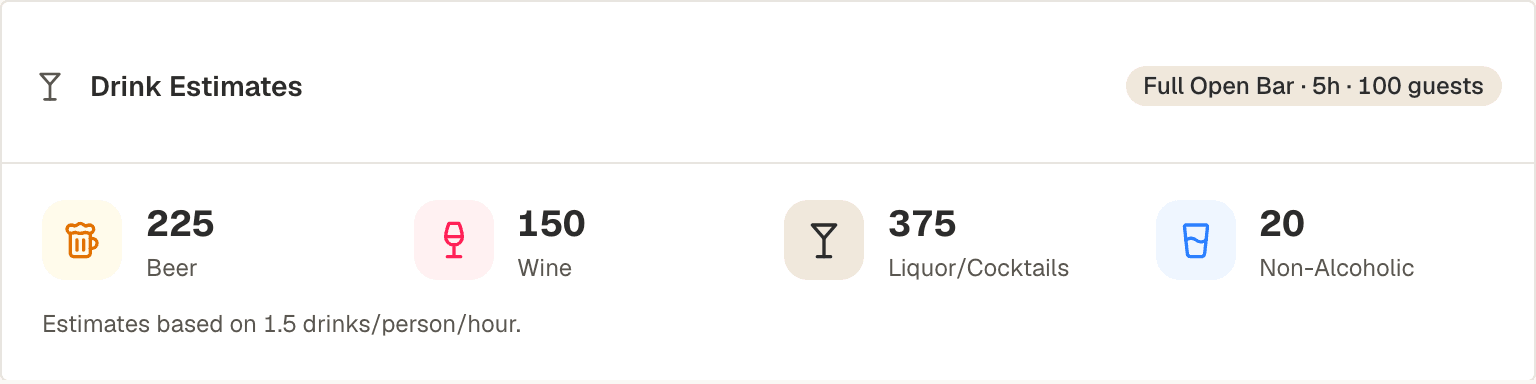
Food & drink
Drink counts from the live guest list and your bar hours, using per-hour ratios, and dietary needs tallied from RSVPs automatically. Planning for a different number? Set it. The math nobody wants to do by hand, done for you.
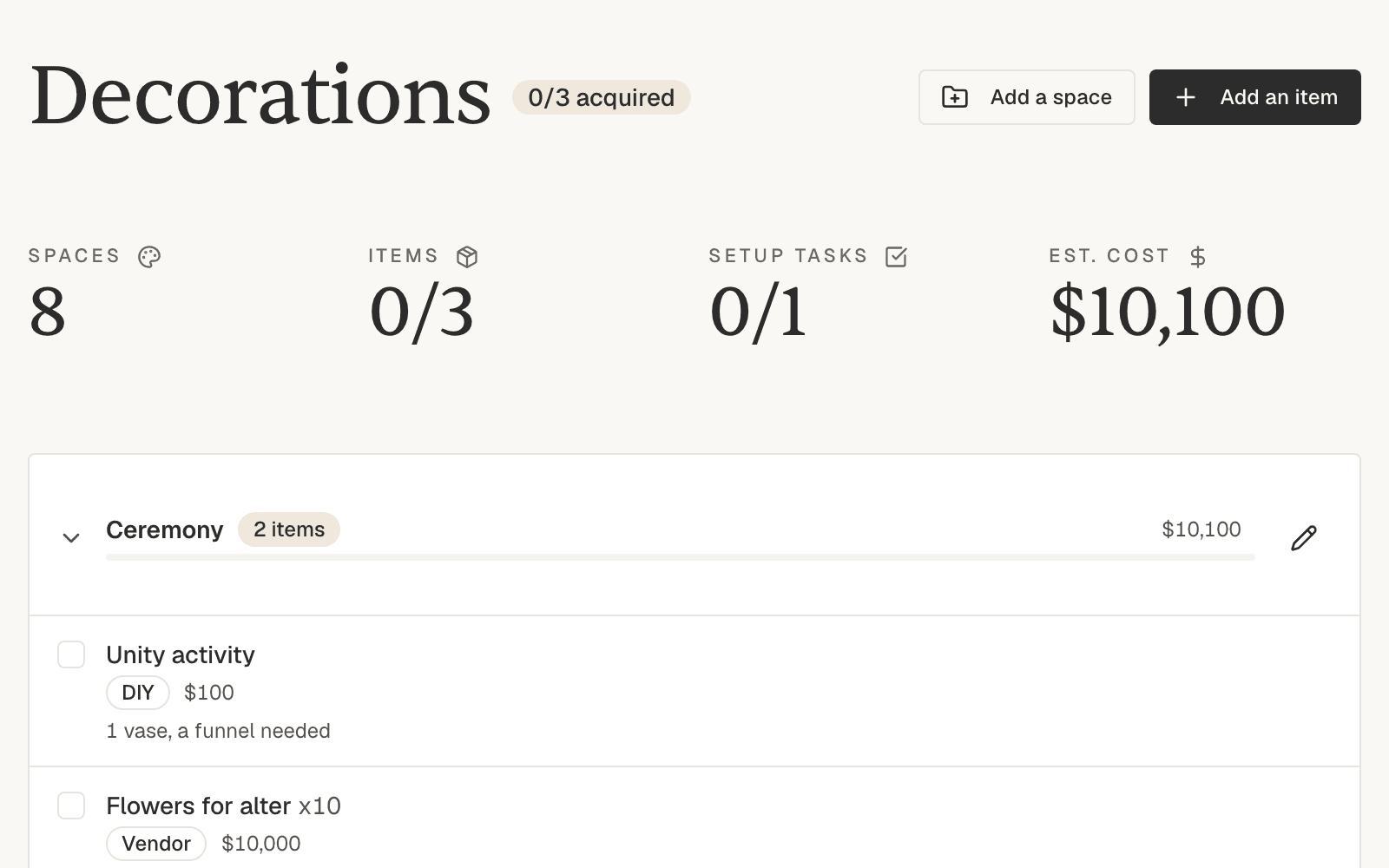
Decor
Decoration planning organized by venue space (ceremony, cocktail hour, reception) with items, costs, sources, and setup tracking. So the arch actually gets built.
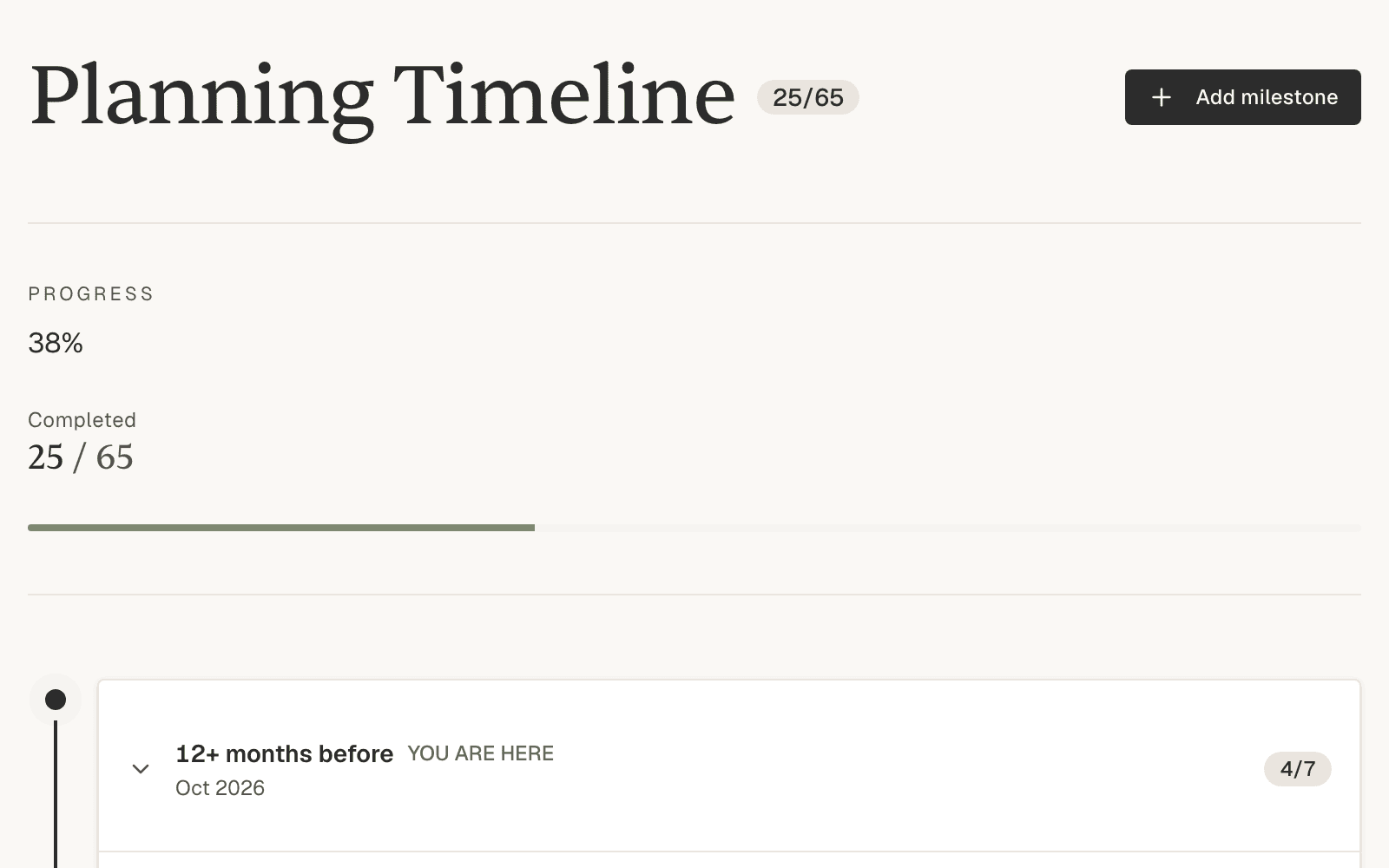
Planning timeline
Sixty-one milestones organized by time-to-wedding, with a you-are-here marker and overdue flags. It knows what month it is even when you'd rather not.
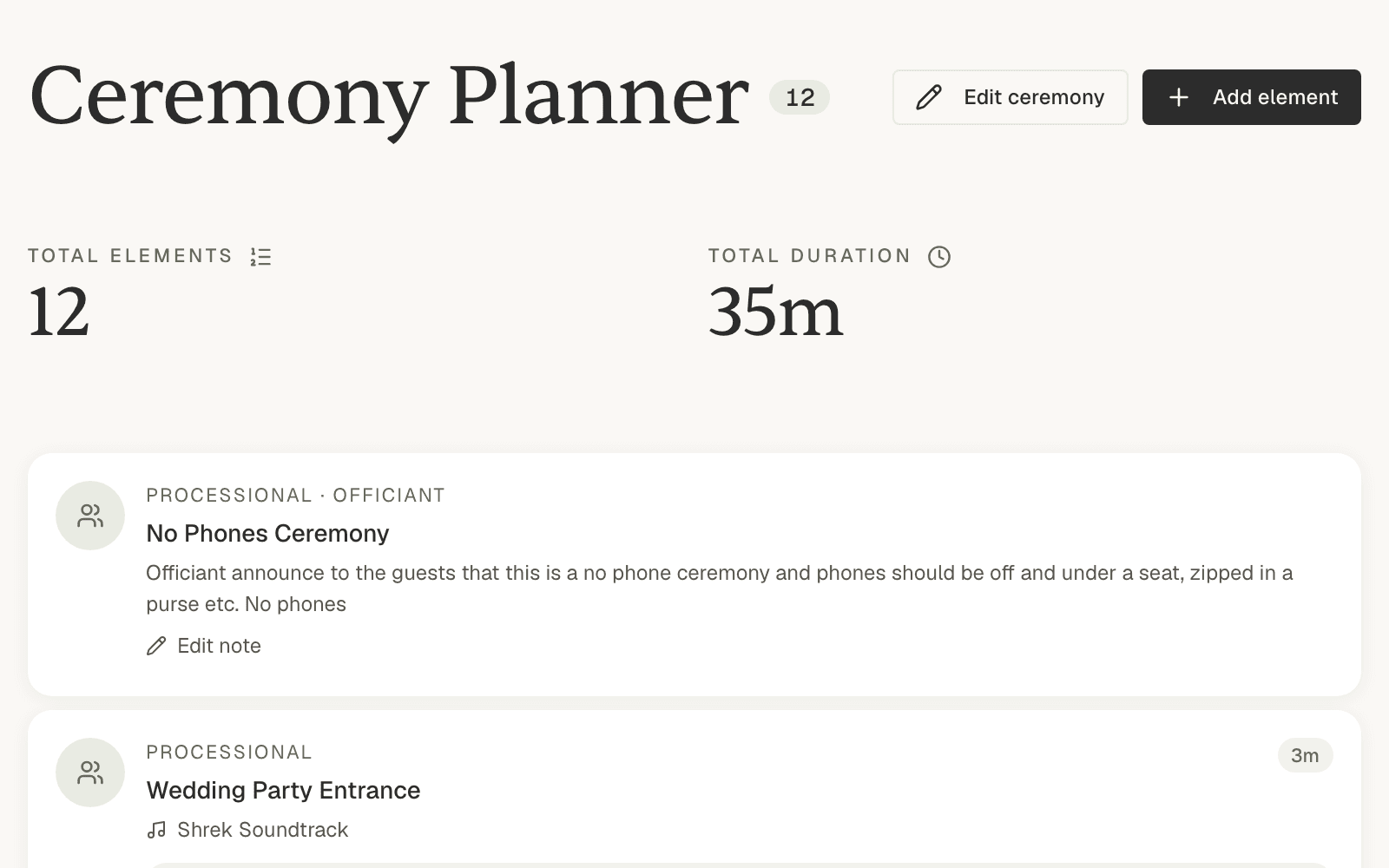
Ceremony
The ceremony as ordered elements (processional, readings, vows, rings), each with a duration, so you know the whole thing runs twenty-two minutes before anyone walks.
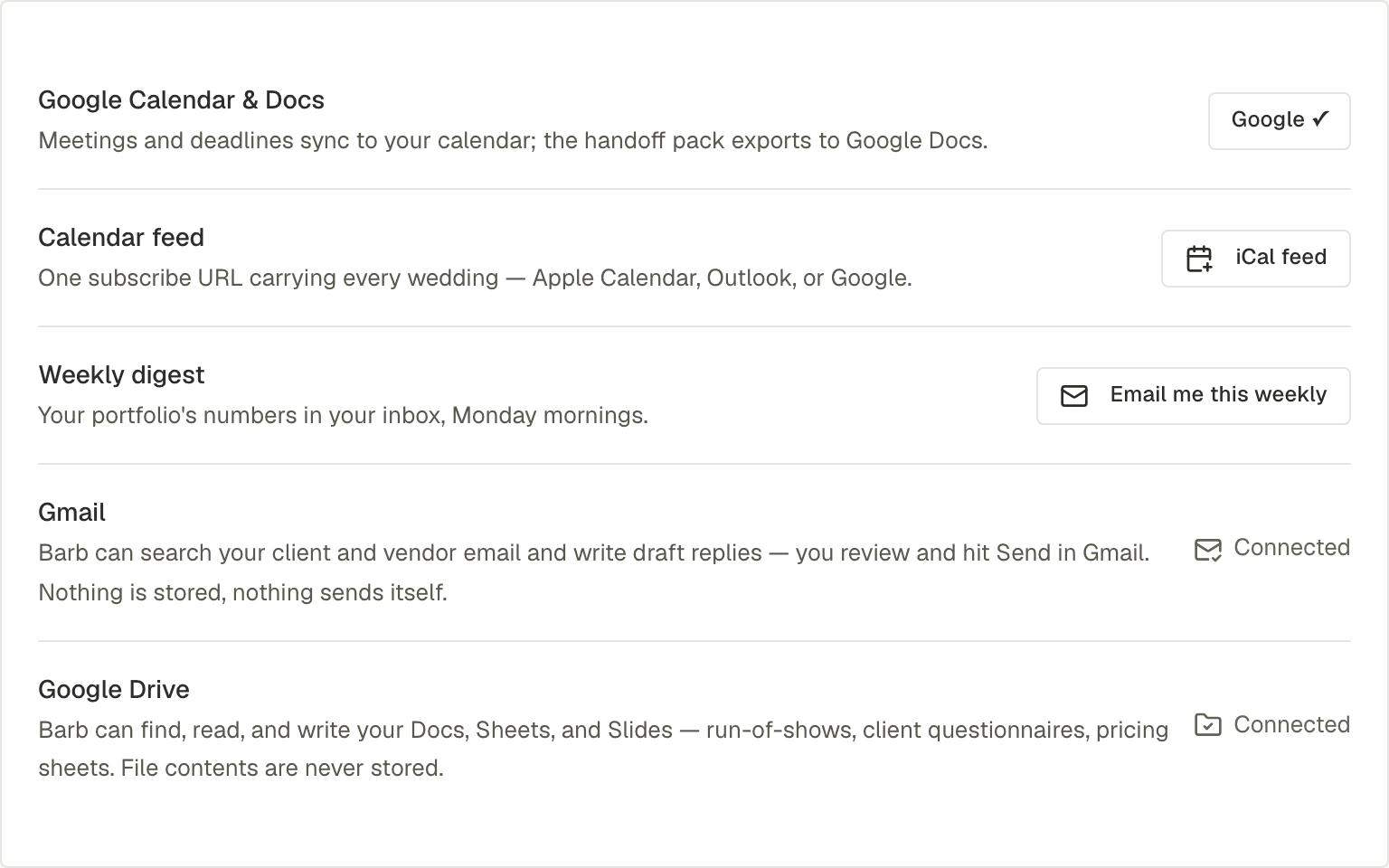
Connectors
Google Calendar and Drive, wired in. Deadlines land on your real calendar, and Barb writes your planning docs straight into Drive. Gmail is coming: Barb will read what a vendor sent and draft the reply for you to send.
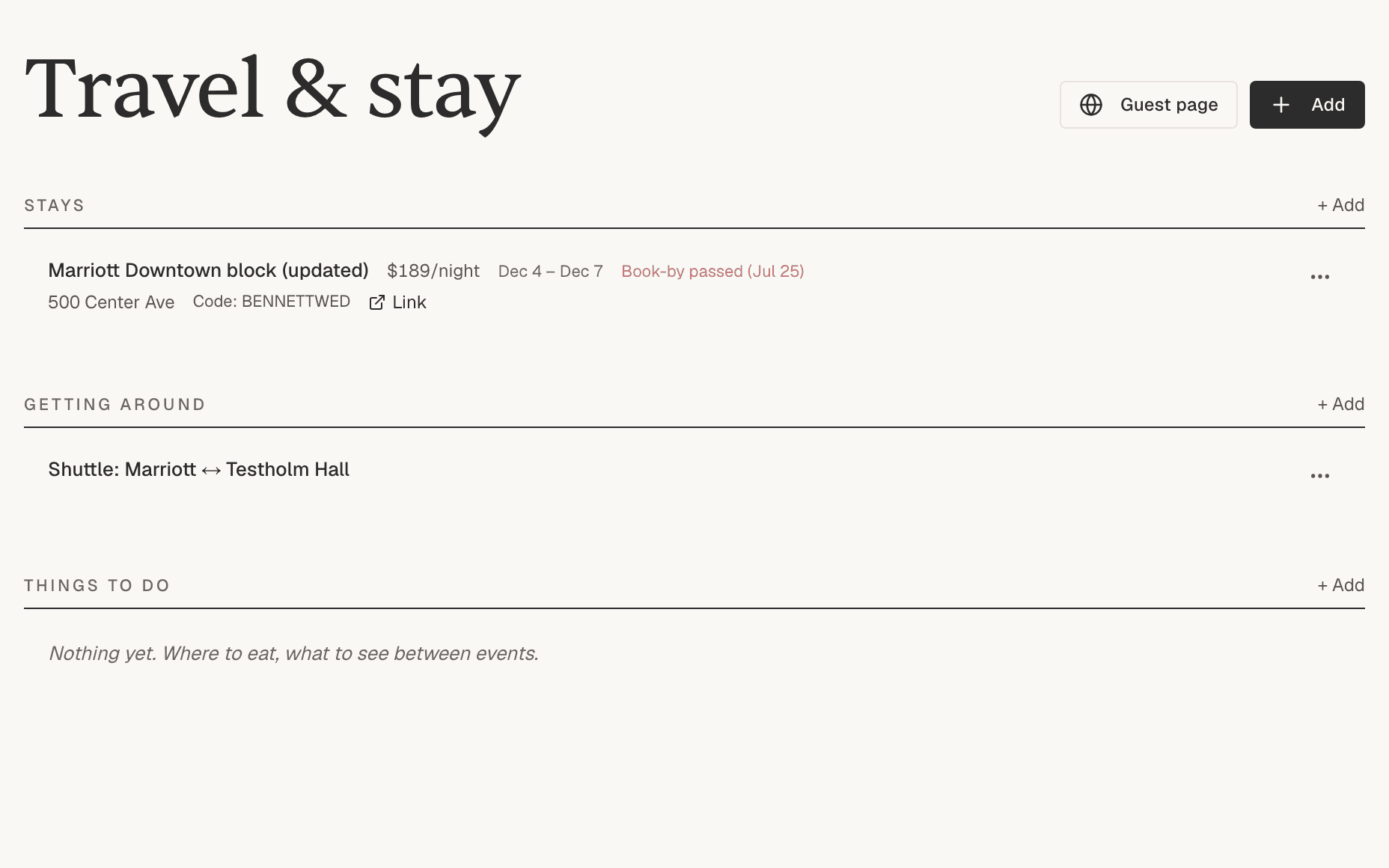
Travel & stay
Hotel blocks with their codes and book-by dates, shuttles, and things to do between events. On Max, Barb turns it into a page you can send your guests.
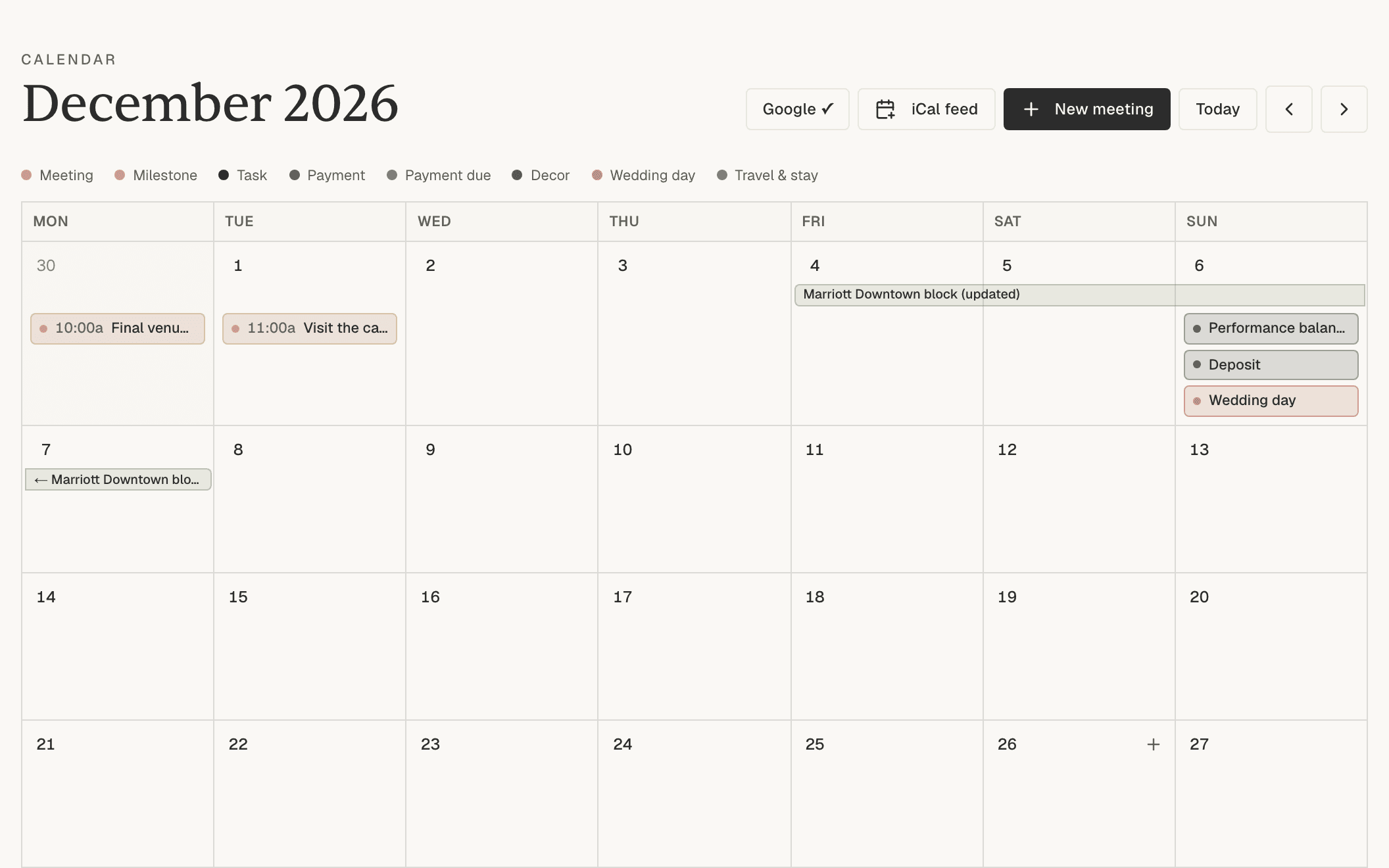
Calendar
Every meeting, milestone, payment and deadline in one month view. Subscribe from Apple Calendar or Outlook, or sync with Google Calendar.
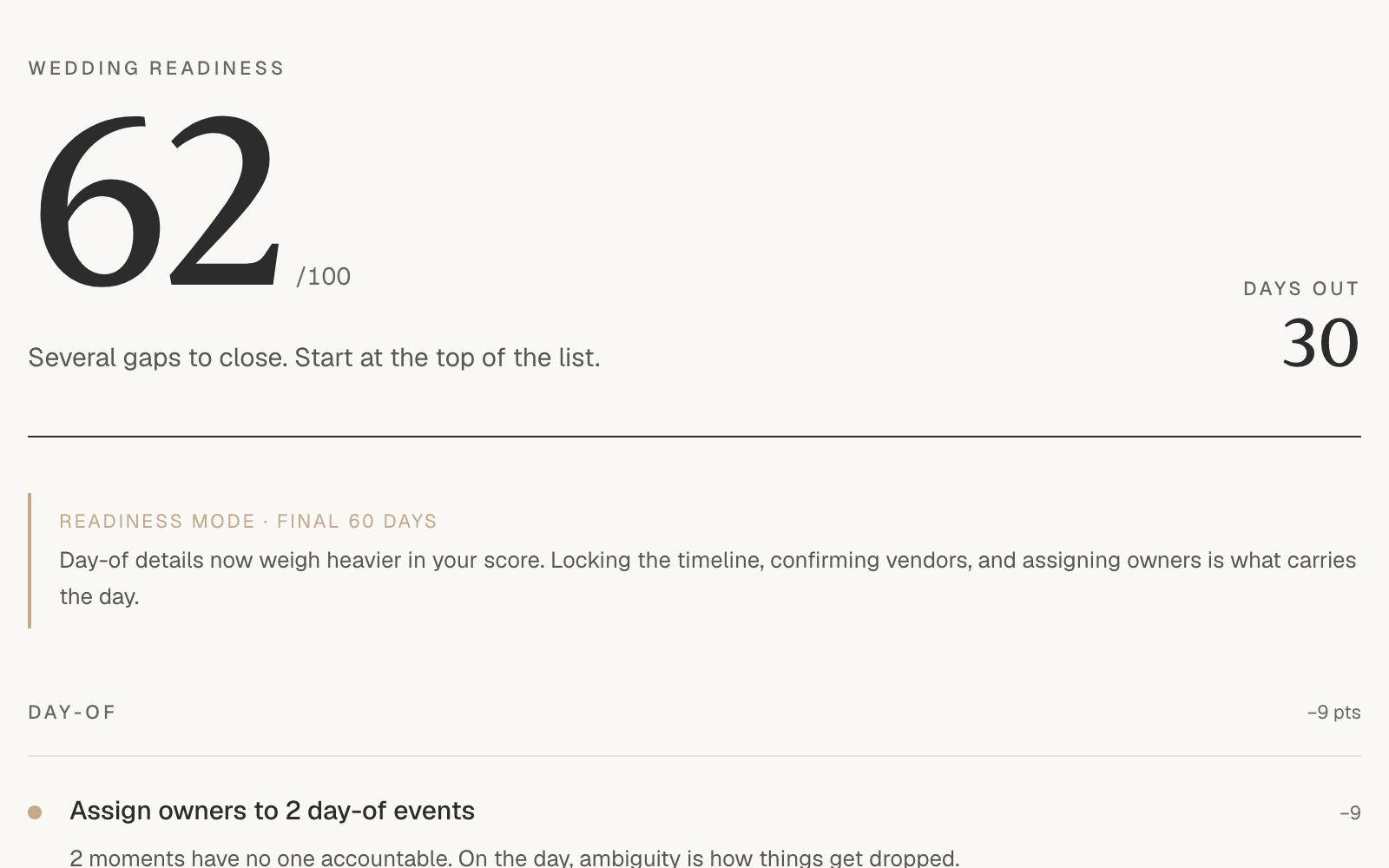
Readiness score
A score from 0 to 100 for how ready the wedding is, with what's slipping and the next fix at the top. Inside the last 60 days, the day-of details count for more.
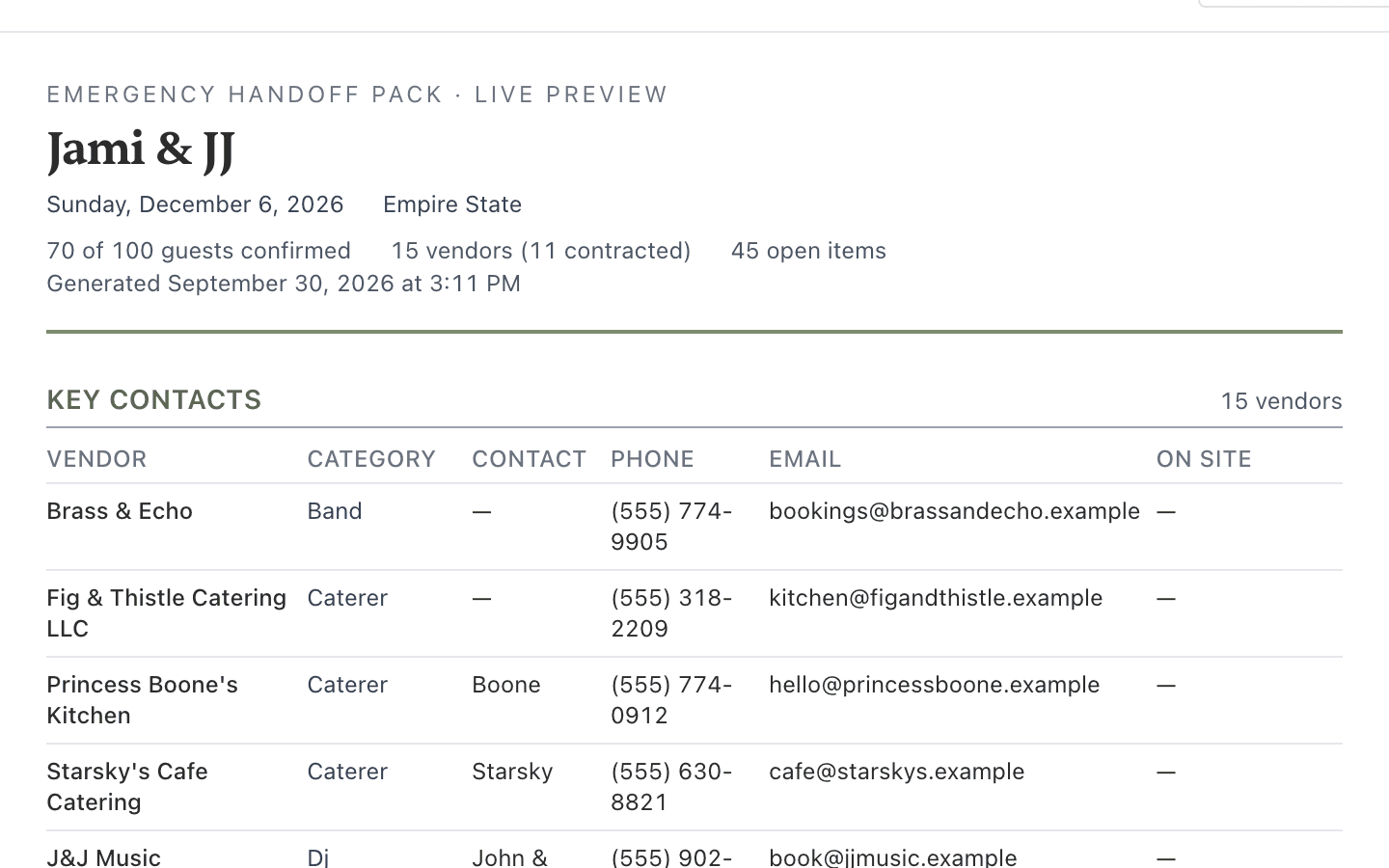
Handoff pack
Every contact, contract and open item in one document for the coordinator, the venue, or whoever takes over on the day. Export it to Google Docs or print it.
Every part of the wedding. One database. Zero “wait, which version is current?”
Built for our own wedding first
New to all of this? Start with the wedding logistics handbook.